- Blogs
- Company Formation
- Dubai Free Zone Business Setup 2026: Cost, Steps, Visas, Tax
Sep 02, 2026
Dubai Free Zone Business Setup 2026: Cost, Steps, Visas, Tax
Share this article
- Dubai Free Zone Business Setup: What It Costs, How Long It Takes, and What You Owe After
- What a Dubai free zone actually is, and how many there are
- Dubai free zones: which ones are worth considering?
- What Dubai free zone business setup costs in 2026
- What is the cheapest free zone in Dubai?
- Which Dubai free zone is best for your business?
- FZE, FZCO or FZ-LLC? Choosing the entity
- How long does Dubai free zone company setup take?
- Can a Dubai free zone company operate in mainland Dubai?
- After the licence: your first 24 months of obligations
- Which businesses should use a Dubai free zone?
- Frequently Asked Questions About Free Zone Dubai
- More questions UAE founders ask
- Final thoughts
Dubai Free Zone Business Setup: What It Costs, How Long It Takes, and What You Owe After
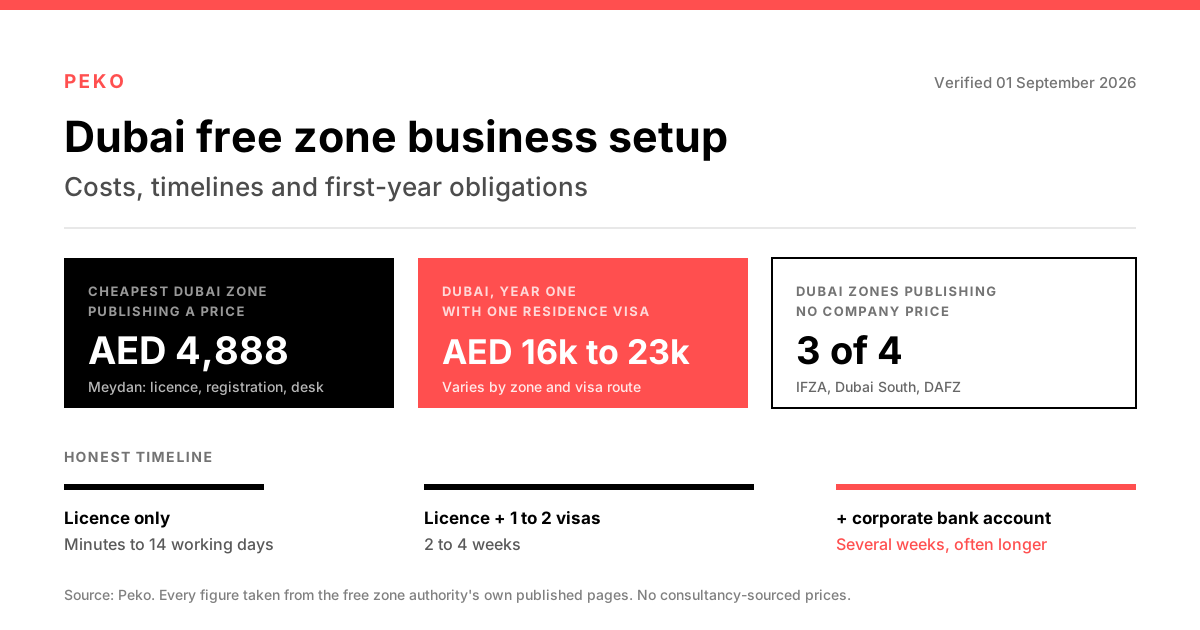
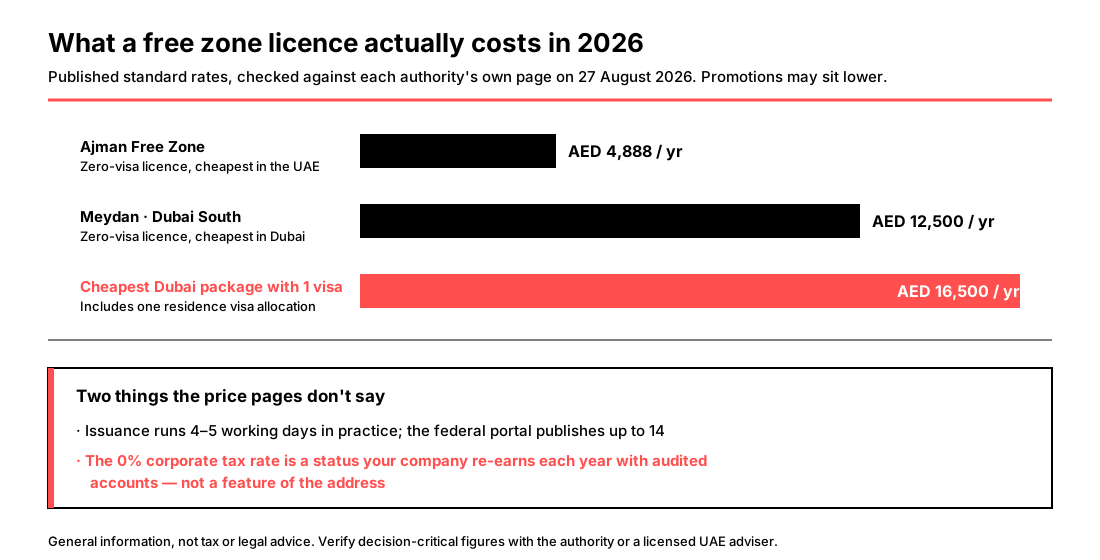
TL;DR: Dubai free zone business setup starts at AED 04,888 a year for a zero-visa licence, at both Meydan and Dubai South, and AED 16,500 buys the cheapest published Dubai package that includes one residence visa. More affordable zero-visa licences exist elsewhere in the UAE, currently from AED 4,166 in Ajman. Licence issuance is typically four to five working days in practice, though the federal portal publishes up to 14. The caveat almost every guide misses: the 0% corporate tax rate is a status your company re-earns each year with audited accounts, not a feature of the address.
|
Last verified: 1 September 2026. Licence prices and regulatory deadlines change, and several zones are running promotions that sit below their standard published rates. Every figure below was checked against the authority's own published page on that date, and this page is on a 90-day review cycle.
General information, not tax or legal advice. Corporate tax positions turn on your specific facts. Verify anything decision-critical with the Federal Tax Authority or a licensed UAE adviser.
Dubai free zone business setup: costs, timelines and the obligations that follow, verified 1 September 2026. Most Dubai free zone guides tell you what the licence costs. Very few tell you what the company costs to keep compliant after month one, which is where the real money and the real risk sit.
What a Dubai free zone actually is, and how many there are
A free zone is a separate commercial jurisdiction with its own registrar, its own licence categories, and its own fee schedule. That last point is why Dubai free zone business setup has no single price. There are more than 40 free zones across the UAE, over 20 of them in Dubai, and each sets its own numbers independently.
Two consequences follow. Your licence is issued by the zone, not by the Emirate, so your permitted activities come from that zone's activity list. And the price you were quoted for one zone tells you almost nothing about the next.
If you have not yet settled on a structure, start with our comparison of the three UAE company structures, or the broader Dubai company formation pillar, and come back once free zone is the answer.
Dubai free zones: which ones are worth considering?
Dubai has more than 20 free zones, and for most founders the shortlist is short. Below are the Dubai zones that come up most often, what founders typically use them for, and how transparent each one is about price. That last column matters more than it looks: where a zone publishes nothing, every figure you will be quoted comes from an intermediary.
Two things cut against the received wisdom here. DMCC is roughly three times the price of the SME zones and has no zero-visa option, which tells you it is not competing for the same founder, so comparing it on price alone misreads what it is. And DIFC is both the most expensive and the cheapest zone in this table at the same time, depending on which door you come through, which is worth understanding before you rule it in or out. DIFC also runs its own employment law and its own regulator, so most of the payroll and licensing detail below does not map onto it.
What Dubai free zone business setup costs in 2026
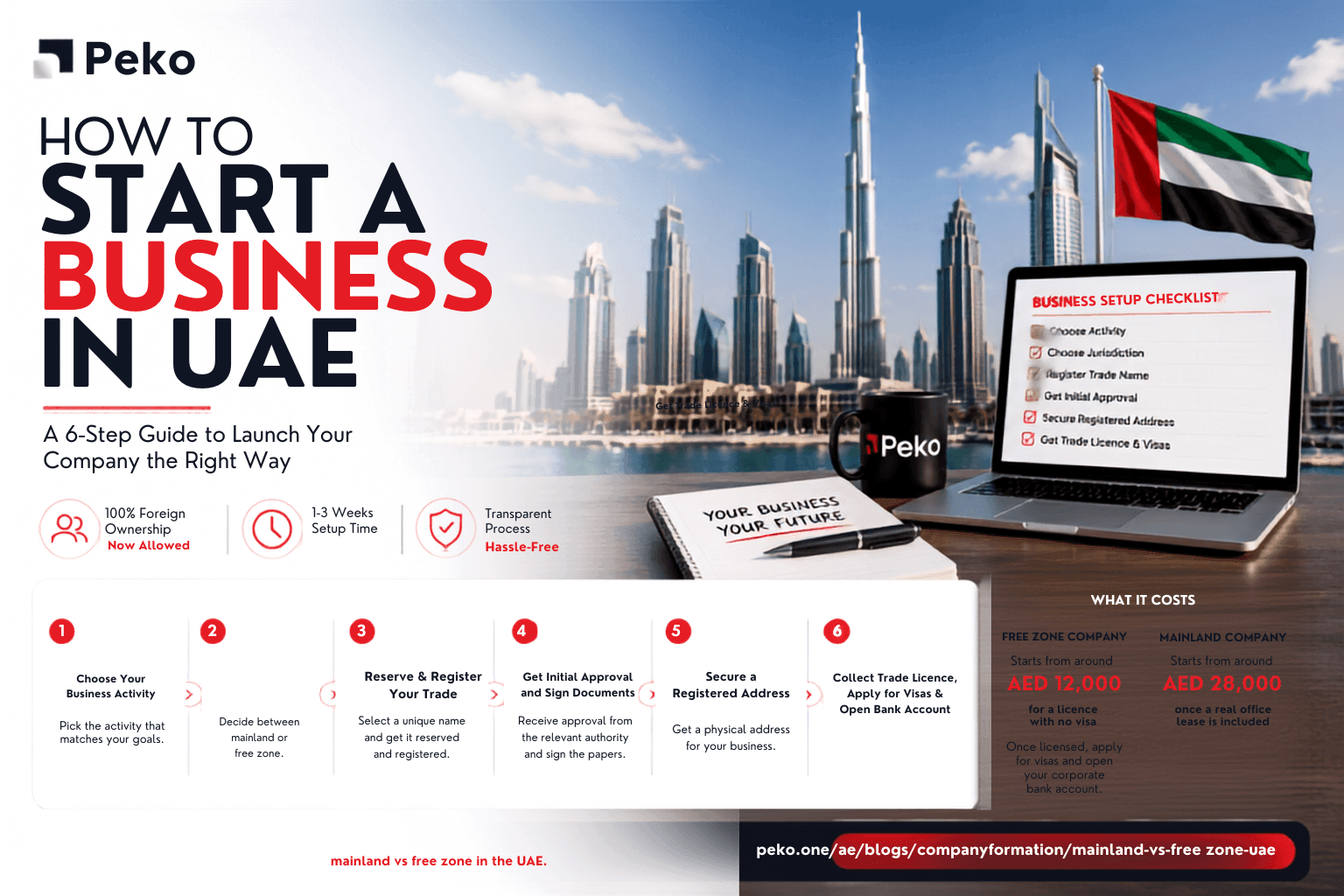
For a single-founder company with one residence visa, a practical year-one budget in a Dubai zone is roughly AED 16,500 to AED 23,000. The bottom of that range is not an estimate: Dubai South publishes a one-visa package at AED 16,500. A zero-visa Dubai licence starts at AED 12,500. More affordable licences exist elsewhere in the UAE, currently from AED 4,166, and Ajman Free Zone publishes a one-visa package at AED 9,848 that undercuts the cheapest Dubai equivalent by about AED 6,700.
Prices as at 1 September 2026, taken from each free zone's own published pages. Where a zone does not publish a price, this table says so.
Dubai free zones
UAE alternatives Dubai founders commonly compare
These are not Dubai zones. They appear here because they are where the lowest published prices actually are, and because founders shortlisting a Dubai zone almost always price them alongside. Your licence, registry and activity list would sit in that Emirate, not in Dubai.
Promotions are running, and they move these numbers more than anything else in this table. Ajman Free Zone shows the mechanic in the open: every package price is a discount printed next to a struck-through original, so its zero-visa licence reads AED 4,166 today against a standing AED 5,555. DMCC has a live Business Acceleration Offer and DAFZ a "No Registration Fee" campaign, both undated. Treat published figures as the ceiling, ask each zone what is currently on, and remember that a promotional price is real but time-limited and almost never carries a visible expiry.
Freelance permit is not a company. DAFZ publishes AED 7,500 a year for its Talent Pass, and that figure circulates widely in cost comparisons. It is a freelance permit, it excludes the visa, and it does not incorporate a company. If you are comparing legal entities, compare company licences on a like-for-like basis and leave freelance permits out of it.
Two of the seven Dubai zones above publish nothing usable. Any IFZA figure you have been quoted (AED 12,900 and AED 14,900 both circulate) came from a partner agency, not from IFZA. That does not make it wrong. It makes it unverifiable.
One more thing before you compare quotes. Consultancy pages currently quote AED 4,999, AED 5,750, AED 6,275 and AED 8,050 for the same SPC package. When four intermediaries disagree by 60% on one product, the number is a lead magnet, not a price.
What's usually included in the headline price
At the cheaper end, the headline figure buys the trade licence, company registration, a coworking or flexi-desk address, and a small number of activities under one licence. Meydan bundles registration, a lease and desk space into AED 12,500. RAKEZ Instant Licence Basic gives you one activity and one shareholder.
What's almost never included
Visas. Almost every zero-visa package is priced without any immigration cost, and the immigration stack is where the real money sits. Using Meydan's own itemised add-ons: visa allocation AED 1,850, establishment card AED 2,000, employment visa AED 3,500, medical and Emirates ID AED 2,250. That is roughly AED 9,600 on top of a AED 12,500 licence for one person. RAKEZ prices additional visas at AED 4,000 each.
Also excluded as standard: a physical office if your visa quota needs one, attestation and translation, corporate bank account assistance, VAT registration where you cross the threshold, and bookkeeping.
Year-two costs and renewal
Every licence figure above is annual, and the trade licence is the one item you will certainly renew every year. Nothing else moves on that clock, which is why year one is a poor guide to what the company actually costs to keep.
Residence visas are typically issued for two years, so a visa taken at setup does not fall due again in your second year. Corporate tax runs on a third cycle: the first return is due nine months after the end of your first tax period, so depending on when in the year you incorporate, it can land in year two or slip into year three. Renewal periods for the establishment card and your workspace vary by zone again.
The practical move is to ask your zone, in writing, for the renewal period on each item separately rather than assuming they all run annually, and to budget across two years rather than one.
Working out your real number? Peko Start prices a setup against your actual activity, visa count and preferred jurisdiction rather than a headline package.
|
What is the cheapest free zone in Dubai?
There is no single cheapest option, because visa requirements, activity count, workspace and immigration costs change the final number more than the licence fee does. For a general commercial or consulting business, Meydan and Dubai South are level at AED 12,500 a year, both with a genuine zero-visa option, and those are the cheapest Dubai licences open to any activity.
If you are a technology business, the answer changes, and DIFC is the surprise. Its Fintech or Innovation Firm route costs USD 100 to register plus USD 1,500 for the commercial licence, about AED 5,900 all in, which undercuts every other Dubai zone. Come through DIFC's standard door instead and the same address costs USD 8,000 registration plus USD 12,000 licence, around AED 73,000 in year one, the most expensive option on this page by a wide margin.
Read the discount conditions before you count on the cheap number, because DIFC's own fee table is more precise than its licence page. The concession is unconditional for the first two years. From years three to seven it applies only to entities with 10 or fewer employees. Above that headcount, and for everyone from year eight, the standard USD 12,000 applies. So the Innovation Licence is genuinely cheap for a small technology team and becomes an eightfold increase the year you outgrow it. Budget for the cliff, not just the entry price.
More affordable general licences exist outside Dubai, currently from AED 4,166 in Ajman through AED 5,750 in Sharjah to AED 6,000 in Ras Al Khaimah, but none of those is a Dubai company. Ajman alone has three separate free zones competing at the AED 4,000 to 5,000 mark, which is worth knowing if price is genuinely your binding constraint.
The trap is that the most affordable packages are all zero-visa, single-activity licences. If you need two visas and four activities, the AED 4,166 headline was never available to you. Check what is currently on promotion too, because several zones discount below their published rates without saying so on the price page.
Which Dubai free zone is best for your business?
Filter on activity eligibility first, not on price. A cheap licence that does not cover what you actually do is worthless, and activity lists differ meaningfully between zones.
A workable order of decisions:
- Activity match. Does the zone licence your specific activity, and how many activities does the package allow under one licence? SPC allows up to five; RAKEZ Basic allows one; Meydan allows three activity groups.
- Visa need. How many residence visas do you need in year one? This drives your office type, because visa quota is tied to the space you hold. A flexi-desk supports a small number; more heads means more square metres. Our UAE employee visa and workplace setup guide covers that mechanic.
- Designated Zone, or not. If you move physical goods, whether the zone is a VAT Designated Zone changes your import and supply treatment. Structural, not a cost question.
- Then cost. By now you will usually have two or three viable zones, and price becomes a reasonable tiebreak.
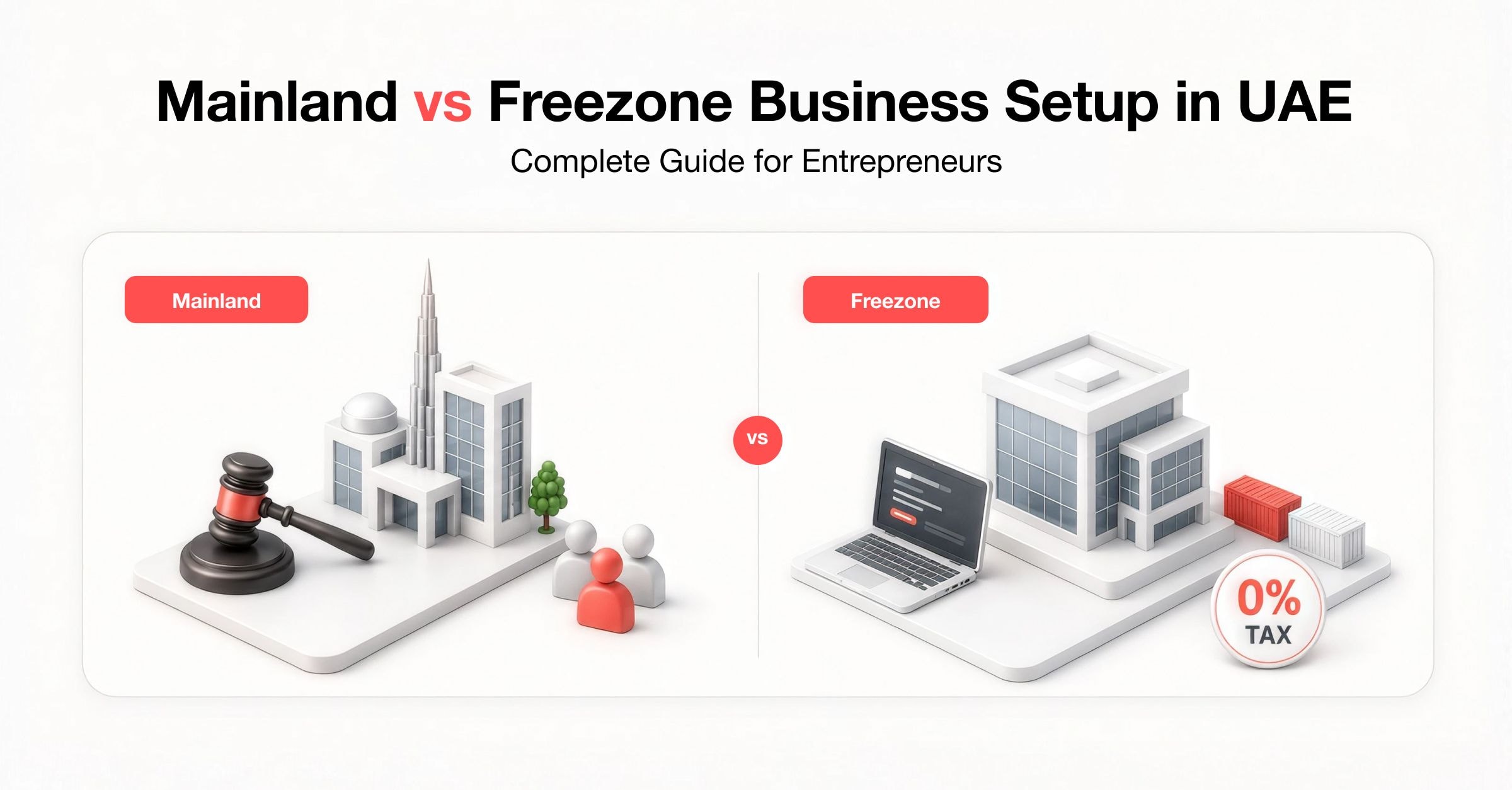
For the deeper trade-offs against a mainland licence, see our mainland versus free zone breakdown.
FZE, FZCO or FZ-LLC? Choosing the entity
Free zone entity names are zone-specific vocabulary for a small number of real structures, and the choice mostly comes down to how many shareholders you have and whether they are people or companies.
The branch point is the one most guides omit. A branch is not a new company. It has no legal personality of its own, so its obligations and liabilities sit with the parent, and it contracts as the parent. Sometimes that is exactly what you want, and sometimes it is a serious mistake.
FZE and FZ-LLC are competing vocabularies more than competing structures. If one zone offers an "FZ-LLC" and another an "FZCO," compare the shareholder rules and the liability position rather than the acronym.
How long does Dubai free zone company setup take?
In practice the licence alone takes four to five working days, and faster on an instant digital product, though the federal portal publishes a longer outside figure. Add one or two residence visas and two to three weeks is realistic. The bank account is the variable that can double the whole timeline.
Nine steps, in order:
- Choose the zone and confirm your activity is on its list. Get this in writing before you pay anything.
- Reserve the trade name. Naming rules are stricter than most founders expect, and religious, political and certain geographic references are refused.
- Choose the entity type (FZE, FZCO, FZ-LLC or branch) and fix the shareholding.
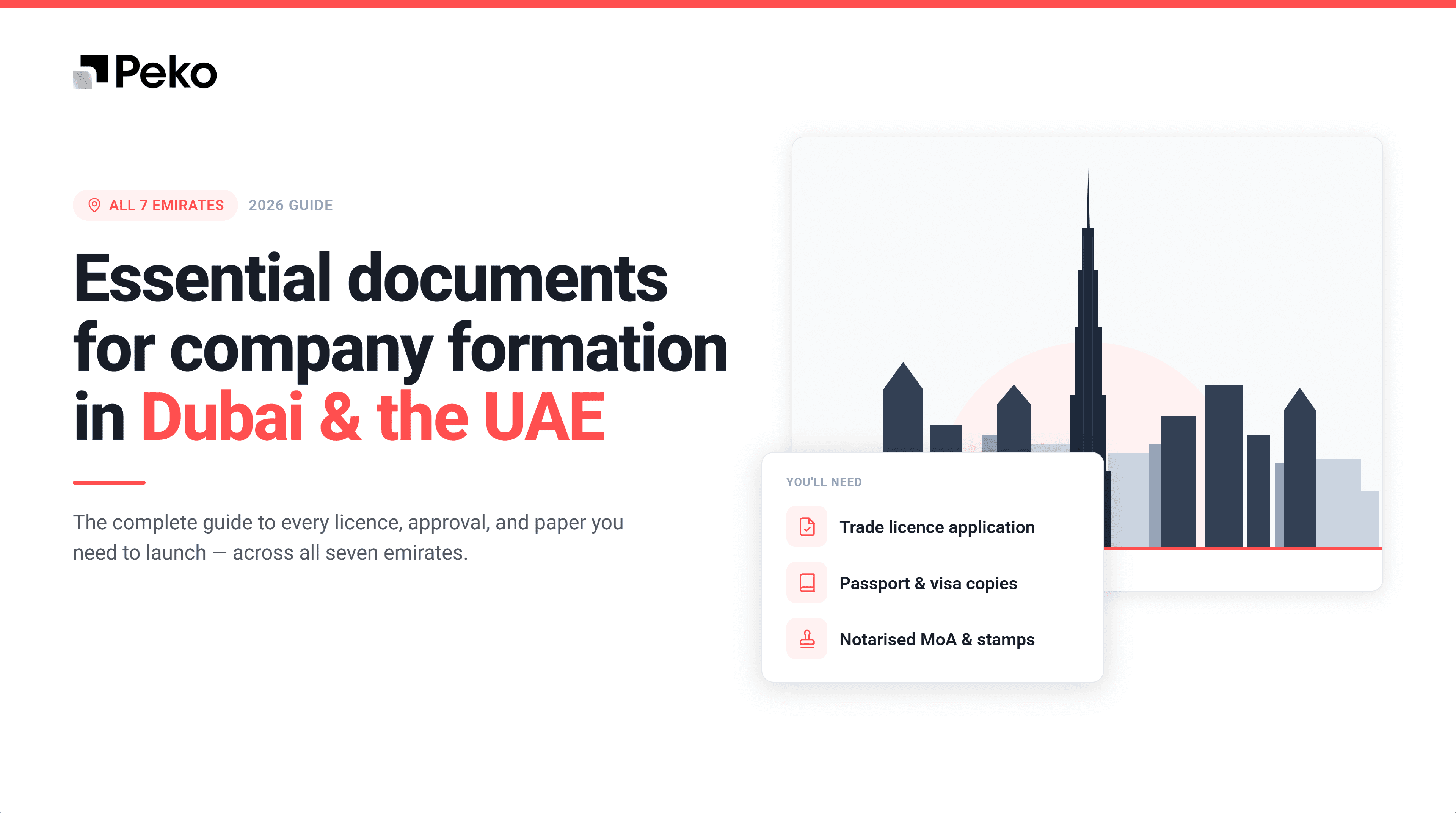
- Submit KYC documents. Passports and, for corporate shareholders, attested incorporation documents. Some zones ask for proof of address, many do not. Attestation is the most common cause of delay here.
- Pay and receive the licence, the incorporation certificate and the memorandum.
- Take the workspace that matches your visa quota, whether a flexi-desk or physical office.
- Run the immigration steps: establishment card and e-channel registration first, then visa allocation, entry permit, status change, medical, Emirates ID and visa stamping per person. E-channel is the step founders rarely budget for. SPC publishes it at AED 2,280, and ANCFZ itemises both an e-channel registration and an e-channel guarantee.
- Register for corporate tax. Mandatory from the outset, whatever rate you expect to pay. Doing it here rather than later avoids a penalty for nothing.
- Open the bank account. Compliance review, not the licence, sets the pace.
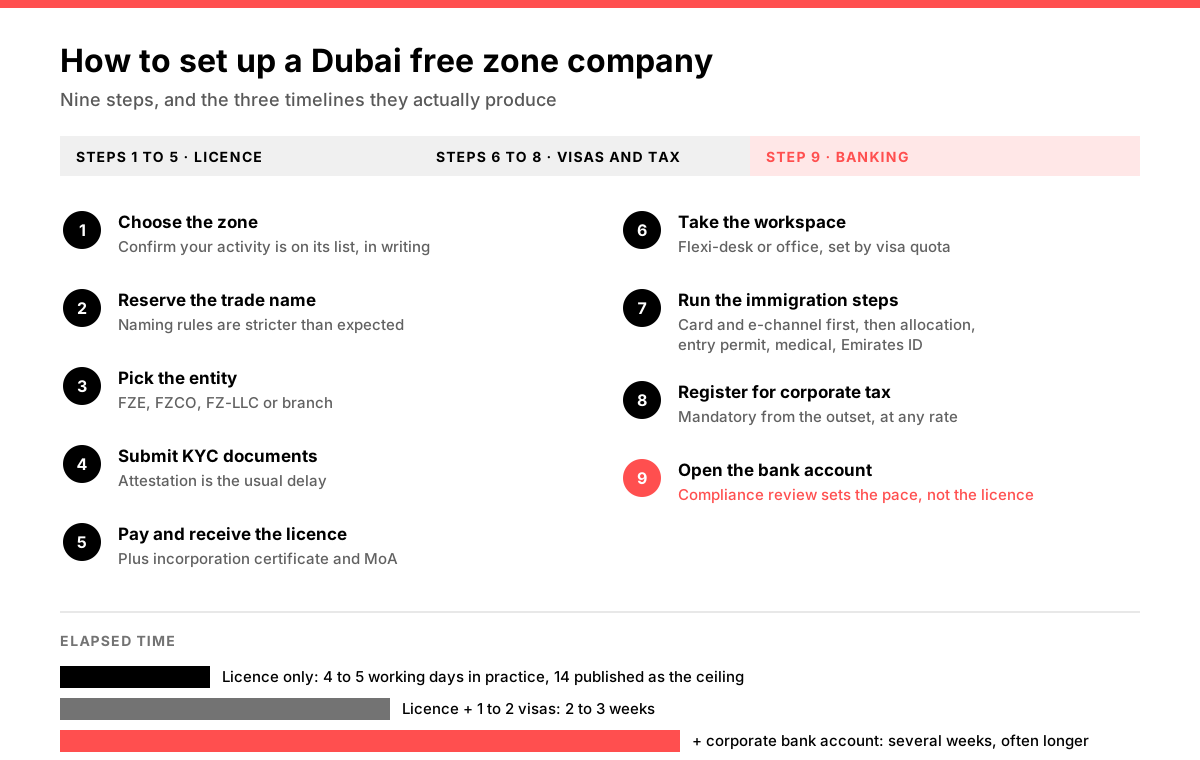
The setup steps, grouped by the phase that drives the timeline. Banking, not licensing, is the long pole. On timing, the published claims are irreconcilable, and the gap is worth understanding rather than papering over. RAKEZ announced business licences "in less than five minutes." u.ae, the federal government portal, states that "after review and approval, you will get a licence within 14 working days." Neither qualifies the claim. Both describe something real: instant digital licences for straightforward single-activity applications, and a standard-processing outside limit for everything else. What actually happens for most founders sits between them, at four to five working days, so treat 14 working days as the ceiling the government is committing to rather than the wait you should expect.
Corporate bank account opening can take several weeks and may take considerably longer depending on the bank and the company's profile. Approval is never guaranteed. In practice, four to twelve weeks is a common observed range, but it moves with your activity, shareholder nationalities, source of funds, documentation and expected transaction profile, and no free zone can promise it on a bank's behalf.
Ready to file? Peko Start handles the formation steps above, including the document trail the bank will ask for.
|
Can a Dubai free zone company operate in mainland Dubai?
Yes, and since March 2025 the route is set out in law rather than left to practice. Dubai Executive Council Resolution No. (11) of 2025, in force from 3 March 2025, regulates how free zone establishments conduct activities inside the Emirate outside their zone.
Three routes, in ascending order of commitment:
- Sell through a mainland distributor or agent. No new licence; the mainland party carries the licensing obligation.
- Get authorisation under Resolution 11 of 2025. Article 4 provides for a branch licence within the Emirate, a branch operating out of the free zone, or a permit for specific activities. Branch licences run one year and renew; activity permits run no more than six months (Article 7).
- Set up a separate mainland company. Full licensing, full flexibility.
Two corrections to claims in circulation. A Department of Economy and Tourism licence alone does not unlock mainland activity: Articles 5(2) and 6(3) require prior approval from the free zone licensing authority too, so the NOC is not optional. And a local partner is not required for most mainland activities, following the 2021 amendments to the Commercial Companies Law.
Now the consequence nobody connects. Article 3(b)(2) of the same resolution requires you to "maintain separate financial records for the Activities conducted outside of the Free Zone and within the Emirate, distinct from those kept for Activities conducted within the Free Zone." Mainland-sourced income is generally non-qualifying income for corporate tax, and non-qualifying revenue is capped. Exceed the cap and you lose the 0% rate. So the route you pick to reach the mainland is a tax decision as much as a licensing one, and your books are the evidence.
After the licence: your first 24 months of obligations
This is where most guides stop and where your actual costs begin. Licence, visa and bank account are the setup. What follows is the operating calendar, and it starts sooner than founders expect.
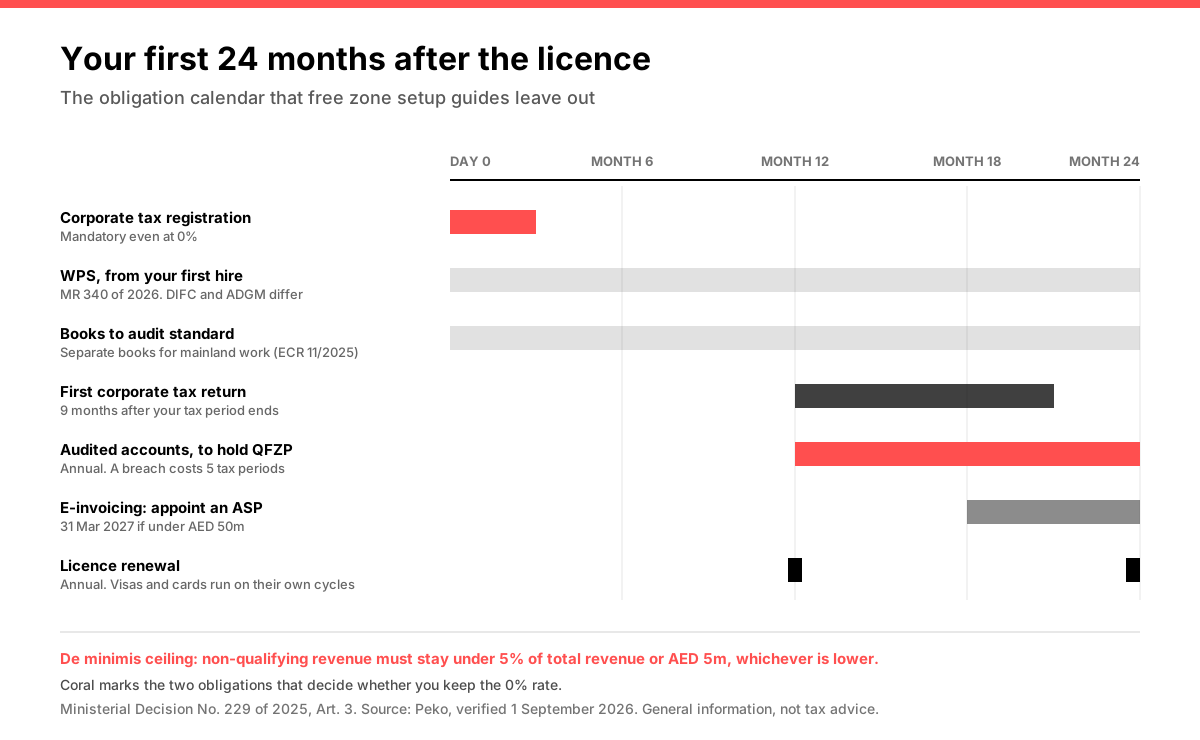
Corporate tax registration is mandatory even if your rate is 0%. Registration and rate are separate things, and skipping registration because you expect to pay nothing is a penalty, not a saving.
Under Article 3(2) of Federal Decree-Law No. 47 of 2022, a Qualifying Free Zone Person pays 0% on Qualifying Income and 9% on taxable income that is not Qualifying Income. Notice the phrasing: the 0% attaches to a person meeting conditions, not to a place.
Losing that status is not the cliff it is often made out to be, and this is the part both the "0% forever" pages and the scare-story pages get wrong. A free zone company that is not a Qualifying Free Zone Person simply falls back to the standard regime: Article 3(1) of the same law charges 0% on taxable income up to a Cabinet-set threshold and 9% above it, and Cabinet Decision No. 116 of 2022, Article 2(1) sets that threshold at AED 375,000. So a small free zone company that fails a QFZP condition still pays nothing on its first AED 375,000 of taxable income. The 9% only bites above that.
The QFZP conditions, which almost no competing page states:
- Maintaining adequate substance in the UAE, meaning core income-generating activity conducted in the zone with adequate assets, adequate qualified full-time employees and adequate operating expenditure.
- Deriving Qualifying Income as defined by Cabinet Decision, from activities on the qualifying list.
- Meeting the de minimis requirement. Under Article 3 of Ministerial Decision No. 229 of 2025, non-qualifying revenue must not exceed 5% of total revenue or AED 5,000,000, whichever is lower. For a company turning over AED 2m, the ceiling is AED 100,000, not AED 5m.
- Complying with transfer pricing and the arm's length principle.
- Preparing and maintaining audited financial statements.
- Not having elected to be subject to the standard corporate tax rate.
One point of precision the market gets wrong: the list of Qualifying and Excluded Activities is now governed by Ministerial Decision No. 229 of 2025, which expressly repealed Ministerial Decision No. 265 of 2023. Advice citing 265 of 2023 as current is out of date.
The consequence of a breach should shape how you keep your records. Article 5(2) of MD 229 of 2025 provides that a Qualifying Free Zone Person failing any condition "shall cease to be a Qualifying Free Zone Person from the beginning of the relevant Tax Period and for the subsequent (4) four Tax Periods." One bad year costs you five. Getting the bookkeeping right from month one is cheaper than reconstructing it, and our guide to UAE accounting software covers what audit-ready actually requires.
E-invoicing: which phase you land in
There is no free zone exemption. Article 3 of Ministerial Decision No. 243 of 2025 applies the electronic invoicing system to "any Person conducting Business in the State in respect of every Business Transaction," and the exclusions in Article 4 (sovereign government transactions, certain airline services, VAT-exempt and zero-rated financial services) contain no carve-out for free zone or designated zone persons. The obligation does not depend on being VAT registered.
Your dates come from Ministerial Decision No. 244 of 2025, as amended in May 2026, and they are phased by revenue. Deadlines below last verified 20 August 2026.
Most new free zone companies sit in the second band, so 1 January 2027 is not your deadline. Anyone telling you it is has read the headline and not the decision.
WPS the moment you hire
Once you have employees, you are inside the Wage Protection System and paying salaries through an approved channel on a fixed monthly cycle. Ministerial Resolution No. 340 of 2026, effective 1 June 2026, tightened both the payment window and the penalty ladder. Two exceptions matter: DIFC and ADGM are separate employment-law jurisdictions with their own regimes. Details are in our UAE WPS compliance guide.
ESR: the filing you no longer owe
Economic Substance Regulations notifications and reports are cancelled for financial years beginning on or after 1 January 2023. Cabinet Decision No. 98 of 2024 restricted the regime to the period from 1 January 2019 to 31 December 2022, and penalties imposed for later years are to be cancelled and any amounts collected refunded.
Much of the advisory market still sells annual ESR filing as a recurring service. If you are being invoiced for one, ask which financial year it covers. Keep the distinction straight, because buyers conflate the two: ESR filing is gone, while the QFZP substance requirement above is very much alive under different law.
Deregistration, if it doesn't work out
Almost nobody prices the exit. DIFC is the exception, publishing winding up and de-registration at nil for all legal structures and a voluntary strike off at USD 200. Everywhere else, closing down means licence cancellation, cancelling every visa and the establishment card in the right order, final audited accounts, clearance certificates, corporate tax and VAT deregistration, and bank closure. Expect several months, and expect to keep paying licence and visa costs until the cancellations complete.
Need to stay compliant rather than just incorporated? Peko accounting covers the audited-accounts and separate-books requirements above, and payroll and HR covers WPS from your first hire.
|
Which businesses should use a Dubai free zone?
Free zone setup fits some models cleanly and others badly, and the difference is usually about who your customers are.
- Consultants, freelancers and agencies serving overseas clients. Zero-visa or one-visa packages, low fixed cost, income that is largely qualifying. The strongest fit.
- E-commerce and digital businesses selling outside the UAE or through mainland marketplaces. Watch the de minimis ceiling if a meaningful share of sales is UAE mainland.
- Traders and distributors moving physical goods. Designated Zone status decides this, ahead of price.
- Technology and IP-heavy businesses. Substance is the binding constraint, not licensing.
- Businesses selling primarily to UAE mainland customers. Least natural fit. Read the mainland routes above before choosing a free zone, because the tax consequence may outweigh the setup saving. Our UAE business finance guide covers the cash-flow side of that decision.
Frequently Asked Questions About Free Zone Dubai
What is the cheapest free zone in Dubai in 2026?
For a general business, Meydan and Dubai South are level at AED 12,500 a year, both including registration and a zero-visa option. For technology firms, DIFC undercuts everything through its Fintech and Innovation Firm route at USD 100 registration plus USD 1,500 licence, about AED 5,900, though that discount is unconditional only for two years and then depends on staying at 10 employees or fewer. More affordable general licences exist outside Dubai, currently from AED 4,166 at Ajman Free Zone.
How much does a Dubai free zone licence cost without a visa?
AED 12,500 a year at either Meydan or Dubai South, both including company registration, with Meydan also bundling a lease and flexi-desk. Technology firms can go lower through DIFC's Innovation Firm route at USD 1,600 for year one, subject to a headcount condition from year three. DMCC publishes no zero-visa option at all, and IFZA and DAFZ publish no company package prices, so any figure quoted for those came from an intermediary rather than the authority.
How much does a Dubai free zone company cost with one visa?
AED 16,500 is the lowest published Dubai figure, Dubai South's Essential package with two activities, one visa and a flexi-desk. Budget up to about AED 23,000 depending on the zone. On Meydan's itemised add-ons, one employment visa adds visa allocation AED 1,850, establishment card AED 2,000, employment visa AED 3,500 and medical plus Emirates ID AED 2,250 on top of the AED 12,500 licence.
Do free zone companies pay corporate tax in the UAE?
A Qualifying Free Zone Person pays 0% on Qualifying Income and 9% on income that is not qualifying. That status is conditional and annual, requiring adequate substance, audited financial statements, transfer pricing compliance, and non-qualifying revenue below 5% of total revenue or AED 5m, whichever is lower. Fail it and you are not suddenly taxed on everything: the standard regime charges 0% up to AED 375,000 of taxable income and 9% above. Registration is mandatory regardless of rate.
Can a Dubai free zone company sell to mainland customers?
Yes, through a mainland distributor, through authorisation under Dubai Executive Council Resolution No. 11 of 2025, or through a separate mainland company. Authorisation needs both a Department of Economy and Tourism licence or permit and prior approval from your free zone authority. Mainland income is generally non-qualifying, so it consumes your corporate tax de minimis headroom.
Can I open a UAE bank account with a free zone company?
Yes, and it is usually the longest part of setup rather than the hardest to qualify for. Approval is never guaranteed and depends on your activity, shareholder profile, source of funds and expected transactions. Most banks want an in-person meeting with a signatory, so a fully remote account opening is uncommon.
More questions UAE founders ask
Can I set up a Dubai free zone company without an office?
Yes. Most zones include a flexi-desk or coworking address in the package, which is enough to register. The constraint is visa quota, which is tied to the space you hold.
Can I own 100% of a free zone company as a foreigner?
Free zone companies can generally be 100% foreign-owned, subject to the rules of the relevant free zone and activity. Since the 2021 amendments to the Commercial Companies Law, full foreign ownership is also available for most mainland activities, so ownership is no longer a reason to pick a free zone.
Can I set up remotely, without visiting the UAE?
Registration and licensing can usually be done remotely with attested documents, and no power of attorney is required for either. Residence visa issuance is the part that needs you in the country, for the medical and Emirates ID.
Which Dubai free zone is best for a consultancy?
Meydan and IFZA are the two most commonly used for professional services. Meydan is the one that publishes a price.
What is a Designated Zone and does it matter?
A VAT classification, not a licensing one, and it changes how goods movements are treated. It matters if you hold physical stock and not at all if you sell services.
Do I need to register for VAT?
Only when your taxable supplies pass the mandatory threshold. A free zone licence does not exempt you either way.
Can a free zone company own Dubai property?
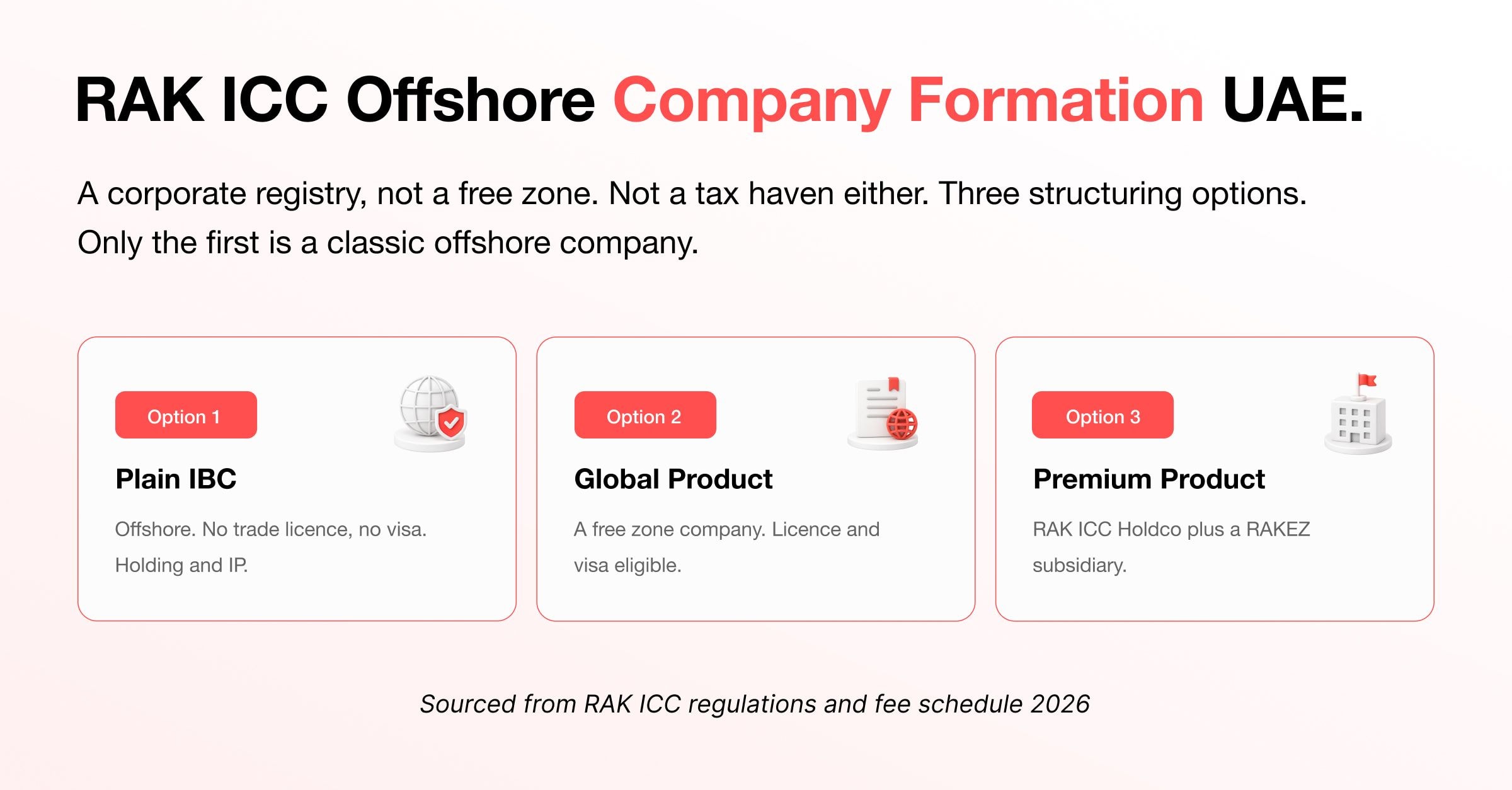
Sometimes, depending on the zone, the entity type and the location. Our RAK ICC offshore guide covers where those rules land.
Final thoughts
The cheap part of free zone setup is the part everyone writes about. The expensive part arrives 12 to 24 months later, in audited accounts, an e-invoicing deadline, and a de minimis threshold that quietly caps how much UAE mainland business you can do before the 0% rate disappears for five years.
So price the second year, not the first. And be honest with yourself about which Emirate you are actually buying into, because an AED 6,000 licence in Ras Al Khaimah is not a Dubai company however the comparison table is laid out.
Peko Start covers the formation itself, and accounting and payroll pick up the obligations above once your licence is issued.
|
General information only, current as at 1 September 2026, and not tax or legal advice. Corporate tax outcomes depend on your specific facts, and free zone fees change without notice. Confirm current rules with the Federal Tax Authority, the UAE Ministry of Finance or a licensed adviser before acting.